Just How Specialists Make Sure Straight, Level Fencing Lines
A right, level fence line looks basic until you're the one responsible for it. Up close, the reality is untidy: irregular ground, refined dips that turn up only after the articles are set, border lines that aren't where people expect, and hardwood that changes a little as periods transform. Good fencing job is mainly peaceful decisions made early, not heroic repairs at the end.
When people inquire about "straight and level fencing lines," they generally imply two various points. Straight has to do with alignment delegated right, adhering to the concurred limit and keeping constant spacing. Level is about the leading rail or paling line preserving the desired elevation also when the ground rises and falls. Professionals gain that result with a mix of format technique, dimension approaches, and useful judgement.
Below is just how experienced Fence contractors and Fencing installers typically arrive, what goes wrong when they do not, and the checks that divide a fencing that looks precisely the first day from one that still looks right a year later.
Start with layout, not materials
The primary step is format, and it's where the straight line is either birthed or doomed. A great deal of fencing problems begin with assumptions like "the limit is approximately there" or "we can change later." You can adjust later on for small points, but except a fencing line that drifts off track by also a couple of centimetres over a long run.
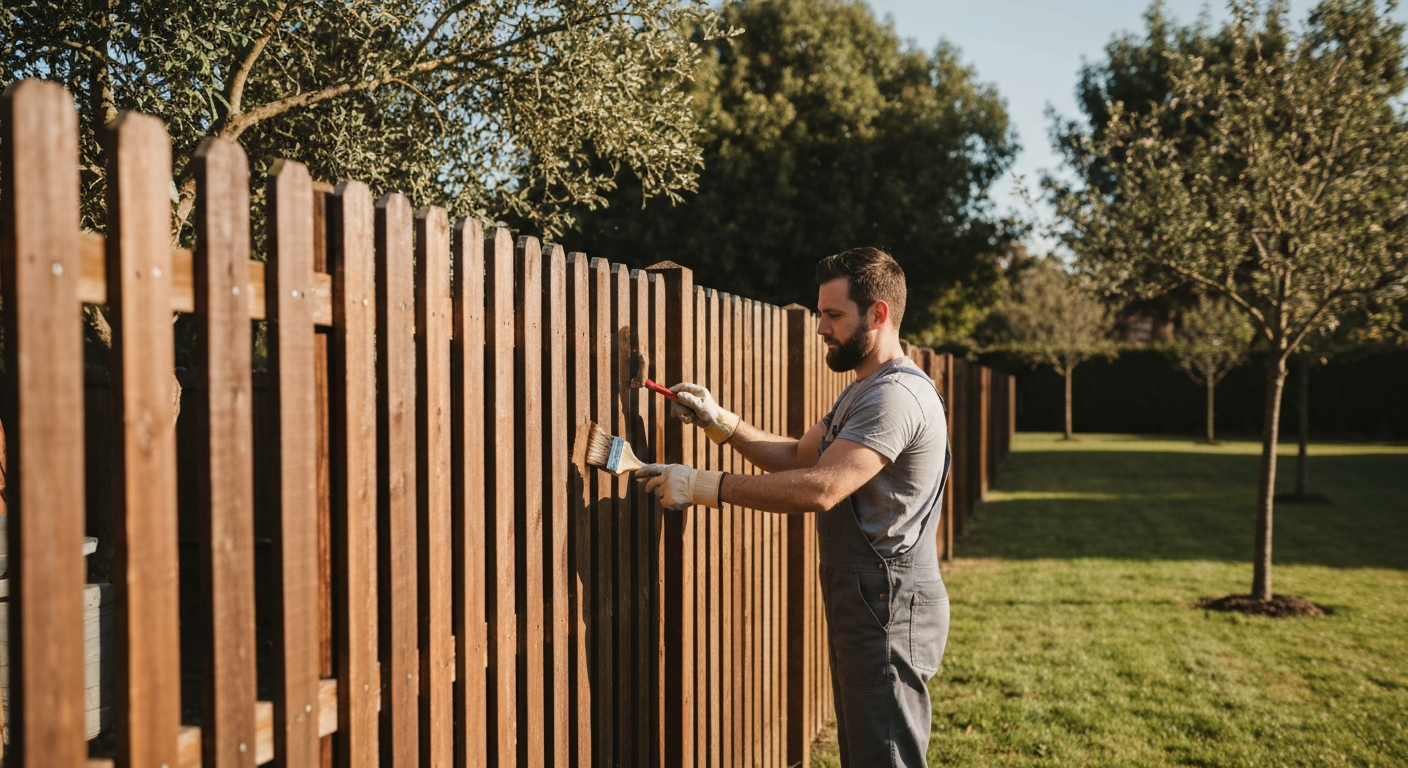
A correct Fence company method starts by verifying the recommendation line before any kind of messages are positioned. That indicates boundary quality, identifying just how the fencing will certainly sit in relationship to slopes, and making a decision where the fencing height will be measured from. If you remain in a regional context like Fence company Melbourne, as an example, the dirt conditions and lawn grading can vary a lot, even within the exact same road, so format checks matter.
Most specialists I have actually best fence company collaborated with reward the design like a task in its very own right. They established a starting point that matches the strategy, then establish the run instructions and maintain rechecking it while risks and stringlines increase. It's slower than "eyeballing," but it protects against the expensive rework later.
Use the right reference and keep it consistent
Once the first reference factor is established, every little thing else depends upon uniformity. The straight line is usually achieved with stringlines and an agreed information, but the information has to be specified clearly.
Here's the essential difference: a fence can be "straight" while still not "level." For instance, you can keep blog posts in perfect placement on a slope and still have the leading rail adhere to the ground's rise and fall. Or you can tip the panels so the rails stay at a consistent height. Which technique is appropriate relies on your design, the neighborhood demands, and what you agreed with at estimating time.
Fence contractors typically select one of these elevation methods:
- Run the fencing parallel to the ground, which makes the leading comply with the terrain. This is common where looks favour an all-natural, ground-hugging line.
- Keep the top rail at a constant height, stepping or "breaking" the account where the ground adjustments. This tends to look really consistent from a distance.
- Board by board adjustment, where each panel height is tuned to neighborhood conditions while preserving the total visual direction.
An excellent fencing contractor Melbourne work will still look constant also if the website is irregular, due to the fact that the reference is secured early.
Straight lines originated from regulating the corners and offsets
People commonly focus on the blog posts, yet the corners and offsets are where straightness is won or lost. If your begin is skewed, the fencing can look "primarily straight" up until you get to completion, then you suddenly notice the drift.
Concrete, wood, steel, or composite, the geometry concepts remain the same. Professionals guarantee straightness by:
- Setting corner points accurately utilizing dimensions instead of distance-only guesses.
- Using a consistent offset from the boundary or from a reference fencing, so the whole run rests where it should.
- Checking stringline tension and height so it doesn't droop or change during establishing out.
Stringlines are straightforward, however they're not magic. They droop when they're as well long without adequate assistance, and they can move if a person strolls previous and brushes them. A pro doesn't just establish a string and leave it. They examine alignment once again prior to exploration and once more after post placement.
On longer runs, you'll usually see specialists include middles or intermediate checks to reduce cumulative error. It's not concerning consuming, it has to do with dealing with physics.
Level happens with actual surveying, not guesswork
Level is the component that annoys property owners because it isn't noticeable till you compare panels, rails, and post heights. A couple of millimetres distinction doesn't look like a lot, however over several periods, it can make the fence feel wavy.
Contractors manage this by utilizing a trustworthy technique for elevation control:
- Laser levels prevail due to the fact that they predict a reference airplane promptly and clearly.
- Spirit degrees and straight edges still matter, specifically when fine-tuning around irregularities.
- Surveying tools or electronic levels obtain used when precision is vital or the website is complex.
In practice, fencing installers will establish an elevation mark at the beginning, after that transfer that elevation to each message location. They typically "proof" the line by determining a few posts prior to committing to last trims. That step is worth it because as soon as concrete is set, remedying an incorrect elevation is pricey and disruptive.
One tiny narrative: on a residential job where the lawn sloped gently and the driveway interfered with accessibility, the initial elevation checks were done from one side. It looked fine during design. The minute the very first rail went on, the top profile began to show a subtle contour. The solution had not been remarkable, but it implied resetting a number of posts and adjusting the rail account. A laser level would have captured it previously, however the service provider still managed it promptly because they were checking placement while building.
Decide early exactly how you'll treat slopes
Straight and level can be inappropriate on uneven ground, so contractors plan the approach prior to setup. The "appropriate" approach depends on the fence kind, local expectations, and the aesthetic goal.
For example, with a paling fence, you might:
- Keep the general leading line regular by tipping article heights and letting the ground differ underneath.
- Keep the boards following the incline by establishing messages so the top rail matches ground changes.
- Use a mix, such as regular rail height for the noticeable front area and a more ground-following strategy elsewhere.
Contractors will certainly additionally consider drainage and functionality. If the fence base develops a lip where water collects, it can cause moist problems, particularly in clay dirts or locations with seasonal wetting. A Fence company Melbourne team frequently sees this pattern due to the fact that stormwater behaviour can change significantly from one block to the following. That influences where articles are established and how the ground is finished around them.
Post placement: the surprise vehicle driver of straightness
Once design is locked, blog posts figure out every little thing. If messages aren't plumb, spaced properly, and set at the best elevation about the reference line, the rest of the fence will battle you.
Professional fence contractors commonly manage three problems:
-
Depth and stability
Fence installer Melbourne solutions frequently work across soil kinds that vary from firm to soft, and that modifications how messages behave after curing. Setting deepness isn't one-size-fits-all because ground problems vary. A specialist will also inspect accessibility for augers and just how easily they can create holes. -
Plumb alignment
Messages are set upright, but "upright" is not the like "straightened." An article can be plumb and still be somewhat off the stringline. Specialists use jigs, stringline checks, and supporting while the concrete sets or while rails are mounted, particularly for steel or larger fence systems. -
Spacing and panel fit
If spacing drifts, the fencing boards or panels will not land equally. That ends up being noticeable at entrances and edges initially, then spreads out down the run.
In good work, professionals treat every message as part of a system, not a standalone item. They examine plumbness at setup and once again when rails go on, because materials can shift when you apply stress or when braces are tightened.
Rails and bracing: regulating the line while you build
Even if blog posts are best, rails can introduce problems if they're mounted without reference checking. Top rails are long, and small errors can magnify along the run.
Experienced fencing contractors will certainly commonly:
- Install a minimum of one rail straight and level early, after that utilize it as a recommendation for subsequent sections.
- Use temporary supporting if required so rails do not pull out of alignment while repairing boards or palings.
- Keep checking throughout several spans, not simply at the blog post they're functioning on.
That last part issues. A rail can look straight between two articles yet still be off about the earlier sector. Examining "between earlier and current" is what protects against the slow drift that home owners see later.
The gate test: where precision obtains revealed
If there's one place where careless placement becomes evident, it's a gate. Gates are crafted to turn and lock correctly, and they expose timing errors swiftly. A fence company that takes straight and degree seriously will check entrance alignment as part of the process, not only at the final day.
Gate positioning depends on:
- Post spacing and width
- Post plumb and height
- Rail degree and constant repair points
- Diagonal placement so eviction does not rack
When specialists keep the fence line true from the beginning, the gate installs efficiently. When they do not, you see the symptoms: latch misalignment, unequal spaces, or a gate that scratches one edge greater than the other.
Concrete setup and timing impacts the final line
This is just one of those practical details that homeowners hardly ever think about, yet contractors do. Fencing articles are commonly set in concrete, and the healing procedure matters.
If a person relocates dental braces prematurely, knocks an article while repositioning timber, or gets rid of stringlines prior to the concrete has actually stabilised, you can wind up with a blog post that's practically "close" yet slightly shifted. That shift appears as unequal panel gaps, a top rail that doesn't match the reference line, or a fence that looks subtly twisted.
Good Fence installer techniques include:
- Keeping dental braces in place till the concrete is firm enough.
- Avoiding hefty impacts near fresh collection posts.
- Checking placement after setup and prior to rails are fully fixed.
Not every change is evident right away. Sometimes the backyard clears up a fraction, or the timber parts loosen up as they're screwed down. Professionals account for that by rechecking critical referral factors prior to last fix-offs.
Finishing options can remedy or reveal flaws
Even with wonderful design, just how you complete figures out whether the fencing looks crisp or a little off. For instance, board spacing, straightness of board lines, and consistent offsets from rails all influence the "read" of the fence.
A fencing contractor Melbourne team could utilize constant board cutting approaches to maintain uniform expose sizes and prevent the "conical" impact where one area looks somewhat wider.
Also, ending up choices can either hide small abnormalities or magnify them. If you pick to comply with the incline board by board, you'll see tiny height variations because the boards themselves mirror the ground. If you maintain a continuous rail height, the ground variation is concealed beneath, however you might still see small distinctions at fix points if blog posts are not consistent.
That's why specialists match the ending up approach to the website. A fence built to hide uneven ground needs the messages and rails consistent, not simply the boards.
Common sources of jagged or unlevel fences
Even mindful service providers handle incomplete websites. The distinction is they expect problems and stop them. Here are one of the most common root causes of fencing lines that end up less straight or less degree than planned, and just how pros handle them.
A fencing can drift since stringlines weren't supported correctly, or since offsets weren't inspected again after the first few articles. It can look unlevel because height references weren't transferred regularly, or since somebody relied upon the ground at one message as the recommendation. It can additionally fail if the fence line is constructed in areas without reconsidering total positioning after each segment.
Materials and strategy additionally matter. Wood expands and agreements, and if rails are dealt with too firmly without allowing for motion, you can obtain mild bending or unequal top lines. Steel parts, on the other hand, can present alignment concerns if bracket installation is rushed, because a mispositioned brace compels the rail to "endanger" later.
The professionals who do solid work do not simply blame the site. They treat these concerns as foreseeable and resolve them through checking, bracing, and measurement.
A sensible list professionals in fact use
Contractors use check routines, also when they don't call them that. They're generally short, yet they're rigorous. If you want to recognize what to search for when employing a Fence company, this is the type of procedure you 'd wish to hear explained clearly.
- Confirm limit reference points and concurred fence line prior to digging
- Establish a level height datum and move it to every blog post location
- Use stringlines and intermediate checks to stop drift over lengthy runs
- Set articles plumb and validate alignment before rails and panels secure them in
- Recheck straightness and degree after rail setup, before final board trimming
That combination addresses both the straight placement and the vertical profile, and it avoids the fence from drifting as soon as the framework is committed.
What you can ask for from a Fence contractor (without getting technological)
If you're employing Fence contractors or contrasting quotes from a Fence contractor, you can ask questions that push the process towards straightness and degree. You don't need to request for illustrations best fence installation company or engineering details, simply demand quality regarding their method and what they check during installation.
A great Fence installer will certainly clarify it in ordinary language, such as:
- how they set the line and degrees before they dig,
- whether they keep the top rail at a constant elevation or comply with the ground,
- how they take care of slopes and irregular lawns,
- how they examine placement at entrances and edges,
- what tools they make use of, like laser levels or stringline methods.
You can additionally ask about article bracing and for how long they leave it in place, since timing influences whether blog posts stay where they were set.
Trade-offs: straightness, levelness, and what you might accept
A fence line can never ever take care of every site condition completely, and professionals make compromises. Comprehending those trade-offs assists you judge whether the solution fits the situation.
For circumstances, on a high slope, keeping the top rail at a consistent height could require substantial tipping or board trimming, and the fence might appear visually "broken" as opposed to continuous. Adhering to the ground may look smoother throughout the slope, however it can check out as much less degree to the eye. Sometimes the border and accessibility restraints make ideal geometry hard, so pros prioritise what influences everyday use and the total aesthetic line from the street or from inside the yard.
For some house owners, the most crucial aspect is that the fencing looks right when seen from the primary method. For others, it's that the fencing stays regular in elevation at eye level. An expert fencing contractor will go over these preferences, since the right solution relies on exactly how you're mosting likely to live with the fence.
Quality control during install is where the difference shows
The greatest inform is whether a specialist checks as they go. Anybody can gauge at the start and hope for the best. The dependable technique includes checks throughout installation and again at vital turning points:
- after the first few messages are set,
- after rails are installed,
- before final boards and trimming are locked in.
That technique helps capture imbalance early, when adjustments are still simple. When the panels are completely taken care of, moving posts or transforming heights ends up being disruptive, pricey, and more probable to leave aesthetic inconsistencies.
In my experience, the Fence company that interacts an easy plan and afterwards follows it, often tends to provide the constant look people expect. The teams that hurry with layout and count on "we'll change it later on" normally invest even more time on fixes at the end, and those repairs often turn up in the last profile.
How this connections right into choosing the appropriate Fence company Melbourne (or anywhere)
If you're contrasting Fence contractor Melbourne choices, it aids to look beyond the price line. Straight, degree fence job depends on procedure self-control, not just material cost.
A specialist who consistently sets up fences on sloping blocks will certainly prepare for elevation control and message practices. They'll likewise have practical responses for typical regional facts like unequal drainage patterns, access limitations for augers, and boundary clarity problems that show up in older subdivisions.
You can not confirm every technological detail from a quote, however you can look for signals:
- they define their design and inspecting techniques clearly,
- they speak about slope approach instead of generic setup,
- they describe just how gateways are lined up with the fence line,
- they reference bracing and article settling,
- they established expectations regarding just how "level" will certainly be achieved on your specific ground.
Those conversations are a proxy for whether the group will secure straightness and level throughout the build.
The result you're paying for: a fencing that reviews as one line
When specialists ensure right, level fence lines, the difference isn't just in dimensions. It's exactly how the fencing reads as a single continuous border. Blog posts line up, rails hold their attitude, and the boards or panels preserve constant spacing. Under transforming light and darkness, the fence still looks true.
That's what you're actually buying: a structure that doesn't drift, doesn't warp right into an unequal leading line, and doesn't develop the "nearly best" sensation that comes from little advancing errors.
If you desire a fencing that remains visually strong gradually, take note of the boring components. Correct setup, regular referrals, careful blog post setting, and continuous positioning checks are what make the final line look effortless.